Continuous Learning, Reskilling & Career Pathing: Building a Workforce Ready for What’s Next

Access this expert-led webinar instantly, available anytime on-demand.

Included in All-Access Membership
Live Webinar - no upcoming date
Customer Satisfaction Guarantee Learn with confidence. If you're not happy, we'll make it right. That's our guarantee.

Purchase Options

Select an attendee quantity to add to cart.

Recorded Webinar Only

$219.00
or

All Access Membership

The Aurora All Access Membership is designed to provide you with the training that you want when you want it. You will have 100% access to every live webinar, on demand webinar, professional alert, and podcast that Aurora Training Advantage offers with no additional cost.

Learn More About Our All Access Membership
$599.00
All Access Membership

In today’s fast-paced work environment, the ability to evolve is not just an advantage, it’s a necessity. This timely webinar empowers HR professionals with actionable strategies to embed continuous learning, reskilling, and career pathing into the employee lifecycle. You’ll discover how to drive talent retention, close evolving skill gaps, and build a future-ready workforce, all without the need for large budgets or overly complex systems.

Explore how to create a thriving learning culture where employees are motivated to own their development and pursue internal mobility. This session challenges traditional views of HR as a training gatekeeper and repositions the function as a strategic architect of growth. You’ll gain tools to enable scalable change and align learning initiatives with organizational goals, helping both your people and your business stay agile.

Your Benefits For Attending:
  • Define the essential elements of a sustainable continuous learning culture
  • Evaluate reskilling and career pathing strategies tailored to your organization
  • Identify and overcome common barriers that hinder employee development
  • Equip managers to have impactful and ongoing growth conversations with employees
  • Apply simple, repeatable frameworks to help employees envision career progression internally

By attending this session, you’ll walk away with practical solutions you can implement immediately—designed to foster employee engagement, boost retention, and support your organization’s long-term resilience.

Who Should Attend:
HR professionals, people managers, and organizational leaders seeking scalable, realistic strategies to future-proof their workforce.

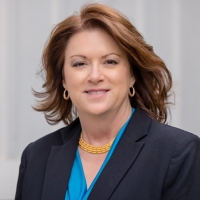
  • Cynthia Keaton

HRCI Credit

Human Resource Certification Institute
Browse HRCI-approved webinars and earn recertification credits online. Live and on-demand HR training for PHR, SPHR, and GPHR recertification. Expert-led sessions from Aurora Training Advantage.

SHRM Credit

Society for Human Resource Management
Aurora Training Advantage is recognized by SHRM to offer Professional Development Credits (PDCs) for the SHRM-CPSM or SHRM-SCPSM. For more information about certification or recertification, please visit www.shrmcertification.org.

ATAHR Credit

Aurora Training Advantage is offering continuing education points designed to recognize dedication to training and excellence in human resources.

ATAOP Credit

Aurora Training Advantage is offering continuing education points designed to recognize dedication to training and excellence in operations.

Customer Satisfaction Guarantee
Invest in your future with confidence! Our Customer Satisfaction Guarantee eliminates all risk, letting you focus purely on mastering new skills and advancing your career. If you're not completely satisfied, we'll ensure you are. Your satisfaction is not just a promise; it's our guarantee.

Frequently Asked Questions

Building a continuous learning culture requires HR to move beyond episodic training events and embed learning into the fabric of daily work. The foundation is leadership modeling—when managers and senior leaders openly discuss their own learning, ask questions in public forums, and celebrate development milestones, it signals that learning is valued and safe. Giving employees dedicated time for learning—not just as a benefit but as an explicit expectation built into job responsibilities—removes the practical barrier of competing priorities that kills most learning initiatives. Making learning resources accessible, varied, and relevant to employees' actual roles and development goals drives voluntary engagement that mandatory training never achieves. Peer learning and knowledge-sharing practices—such as lunch-and-learns, mentoring circles, and internal speakers—leverage organizational expertise while building connection. Recognition systems that reward skill development alongside performance outcomes reinforce learning as a legitimate career investment. HR's role is not to be a 'training gatekeeper' controlling access to external education, but rather a strategic architect of growth systems that enable employees to own their development. Cynthia Keaton's Continuous Learning, Reskilling & Career Pathing webinar at Aurora Training Advantage provides HR professionals with scalable, practical frameworks for building this culture without large budgets or complex systems.
Reskilling refers to the process of teaching employees new skills that enable them to perform different or significantly evolved roles—as distinct from upskilling, which deepens competency in existing role functions. The urgency of reskilling has grown substantially as automation, artificial intelligence, and market disruption continue to transform job requirements faster than traditional hiring and education pipelines can supply talent. HR should prioritize reskilling efforts using a systematic approach that begins with identifying which roles are most at risk of disruption and which new capability areas are most critical to the organization's strategic direction. Overlaying these two data sets reveals which existing employee populations have the combination of foundational aptitude, organizational knowledge, and development readiness to successfully transition into high-demand roles. Employee interest and motivation matter enormously in reskilling success—voluntary participants with genuine development goals outperform those who are compelled to retrain. Early identification of reskilling candidates—before roles become redundant rather than after—enables more gradual, successful transitions. Reskilling investments also carry significant ROI compared to external hiring when the total cost of acquisition, onboarding, and ramp time is factored in. Cynthia Keaton's Continuous Learning webinar through Aurora Training Advantage provides HR professionals with practical frameworks for identifying and executing reskilling strategies tailored to their organization.
Career pathing—helping employees see clear routes for advancement and growth within the organization—is one of the most powerful and underinvested retention tools available to HR. The first step is creating transparent, documented career frameworks that map role progressions, the skills and experiences required to advance, and the competency expectations at each level. These frameworks should reflect actual organizational reality, not an idealized hierarchy—showing both vertical advancement paths and lateral moves that broaden experience and increase employability. Regular career conversations between managers and employees—not just during annual reviews but throughout the year—keep development goals active and demonstrate organizational investment in each individual's future. Identifying internal mobility opportunities and actively encouraging qualified employees to apply for open roles signals that the organization values internal talent over external hiring. Providing development support tailored to each employee's specific career path—whether through project assignments, mentoring, training, or stretch roles—makes career pathing concrete rather than aspirational. The most effective career pathing programs also address the reality that career progression is no longer strictly linear—employees who develop breadth across functions and business units are increasingly valuable and resilient. Cynthia Keaton's webinar on continuous learning and career pathing, available through Aurora Training Advantage, provides practical frameworks for implementing career progression systems at any organizational scale.
Career development conversations are among the highest-impact activities a manager can engage in—yet most managers avoid them because they don't know how to have them productively or fear raising expectations they can't fulfill. The most effective career conversations are grounded in genuine curiosity about the employee's goals, interests, and vision for their future—not in the manager's assumptions about what the employee should want or what roles are available. Starting with open questions ('What kind of work energizes you most?' or 'Where do you see yourself in three years?') opens genuine dialogue rather than scripted compliance. Managers should come prepared to discuss specific developmental experiences, projects, or skill-building opportunities they can genuinely offer, rather than making vague promises. Connecting the employee's development goals to current project opportunities creates immediate, tangible action rather than distant aspirational planning. Managers should also be honest about organizational realities—including realistic timelines for advancement and any skill gaps that need to be addressed—while maintaining an affirming, supportive tone. Regular brief check-ins on development goals between formal conversations maintain momentum without adding meeting burden. Cynthia Keaton's continuous learning and career pathing webinar at Aurora Training Advantage equips HR professionals with tools to train and support managers in having these impactful growth conversations consistently.
Despite broad organizational commitment to employee development, a predictable set of barriers consistently prevents learning and growth initiatives from achieving their potential. Time is the most commonly cited barrier—employees and managers report that competing operational demands crowd out development activities even when both parties genuinely want to participate. HR can address this by helping organizations explicitly protect learning time, build development activities into project assignments, and measure and recognize learning investment as an organizational priority. Lack of clarity about available opportunities is another major barrier: employees who don't know what internal mobility options, training resources, or development programs exist cannot take advantage of them. Regular, proactive communication about learning resources and success stories from peers who advanced internally significantly reduces this barrier. Manager capability is a third critical barrier—managers who don't know how to have development conversations, or who hoard talent to avoid losing their best performers, effectively block employee growth regardless of organizational intent. Manager development around coaching skills and internal mobility encouragement is essential. Finally, fear of failure—employees who are uncertain whether skill development attempts will be supported if they stumble—requires a psychological safety investment. Cynthia Keaton's Continuous Learning, Reskilling & Career Pathing webinar at Aurora Training Advantage provides HR professionals with practical strategies for addressing each of these barriers.