Five Behaviors of a Functional Team

Access this expert-led webinar instantly, available anytime on-demand.

4.6
Included in All-Access Membership
Live Webinar - no upcoming date
Customer Satisfaction Guarantee Learn with confidence. If you're not happy, we'll make it right. That's our guarantee.

Purchase Options

Select an attendee quantity to add to cart.

Recorded Webinar Only

$219.00
or

All Access Membership

The Aurora All Access Membership is designed to provide you with the training that you want when you want it. You will have 100% access to every live webinar, on demand webinar, professional alert, and podcast that Aurora Training Advantage offers with no additional cost.

Learn More About Our All Access Membership
$599.00
All Access Membership

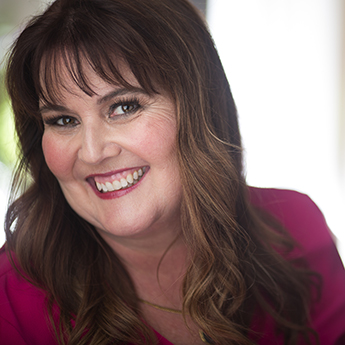
How team members behave, communicate, and interact plays a direct and powerful role in a team’s success—or failure. In this engaging and tool-packed webinar, communication and leadership expert Pamela Jett will equip participants with actionable, evidence-based strategies to foster trust, enhance collaboration, and drive results—no matter their role on the team. This session goes beyond theory and motivational talk, providing real-world techniques backed by neuroscience that participants can begin applying immediately.

Participants will uncover the critical behaviors that define a high-functioning team, identify and address personal roadblocks to collaboration, and learn how to create a mindset shift that empowers teams to become cohesive and results-driven. Whether you're a leader or a contributor, this webinar will help you become an “island of excellence” in your organization and inspire others to rise to their full potential. With a focus on communication, accountability, and trust, this webinar is designed to ignite meaningful transformation within your team.

Your Benefits for Attending
  • Discover the core behaviors that define high-functioning, successful teams.
  • Learn how to build and maintain trust—the essential foundation for all effective teams.
  • Master proven tools and communication techniques that enhance accountability, collaboration, and buy-in.
  • Identify and navigate around personal roadblocks to team success.
  • Develop a personalized action plan to elevate your own contributions and become a catalyst for team excellence.
Why this webinar is a benefit to attend:
You’ll walk away with practical, science-backed tools you can apply immediately to improve team dynamics, boost productivity, and become a stronger, more influential team member.

  • Pamela Jett

HRCI Credit

Human Resource Certification Institute
Browse HRCI-approved webinars and earn recertification credits online. Live and on-demand HR training for PHR, SPHR, and GPHR recertification. Expert-led sessions from Aurora Training Advantage.

SHRM Credit

Society for Human Resource Management
Aurora Training Advantage is recognized by SHRM to offer Professional Development Credits (PDCs) for the SHRM-CPSM or SHRM-SCPSM. For more information about certification or recertification, please visit www.shrmcertification.org.

ATAHR Credit

Aurora Training Advantage is offering continuing education points designed to recognize dedication to training and excellence in human resources.

ATAOP Credit

Aurora Training Advantage is offering continuing education points designed to recognize dedication to training and excellence in operations.
Browse previous versions of this webinar series:

  • Successful Behaviors of a Functional Team
    Webinar Date: June 11, 2025
    VIEWING
  • Five Behaviors of a Functional Team
    Webinar Date: February 1, 2023

Customer Satisfaction Guarantee
Invest in your future with confidence! Our Customer Satisfaction Guarantee eliminates all risk, letting you focus purely on mastering new skills and advancing your career. If you're not completely satisfied, we'll ensure you are. Your satisfaction is not just a promise; it's our guarantee.

Webinar Survey Overall Rating

This webinar received a total of 7 survey responses. Attendees have given an average rating of 4.6 stars out of a possible 5, reflecting the quality and value of the content presented.

Average rating

4.6 / 5
Webinar Presentation
How many of the objectives of the event were met?
4.9 Stars
How useful was the information presented at this event?
4.1 Stars
Overall, how satisfied were you with this event?
4.3 Stars
Speaker Performance
Overall, how satisfied were you with this presenter?
4.7 Stars
How closely did the presenter follow the schedule?
4.9 Stars

Reviews From Webinar Survey

Our webinars are crafted to deliver exceptional value and insight to business professionals. Below, you'll find genuine feedback from attendees.

Marlynn B.
June 12, 2025
4.6 / 5
Webinar Rating:
4.3 Stars
Speaker Rating:
5.0 Stars
Do you have any other comments, questions or concerns?
no comment

Rachel W.
June 12, 2025
5.0 / 5
Webinar Rating:
5.0 Stars
Speaker Rating:
5.0 Stars
Do you have any other comments, questions or concerns?
no comment

Mary R.
June 12, 2025
5.0 / 5
Webinar Rating:
5.0 Stars
Speaker Rating:
5.0 Stars
Do you have any other comments, questions or concerns?
Speaker was amazing. The information was a great tool to use in the future.

Rachel T.
June 11, 2025
4.6 / 5
Webinar Rating:
4.3 Stars
Speaker Rating:
5.0 Stars
Do you have any other comments, questions or concerns?
l

Britney H.
June 11, 2025
4.4 / 5
Webinar Rating:
4.3 Stars
Speaker Rating:
4.5 Stars
Do you have any other comments, questions or concerns?
Enjoyed today's session!

Kim H.
June 11, 2025
5.0 / 5
Webinar Rating:
5.0 Stars
Speaker Rating:
5.0 Stars
Do you have any other comments, questions or concerns?
Another great, informative webinar! Thank you!

Amber M.
June 11, 2025
3.4 / 5
Webinar Rating:
3.0 Stars
Speaker Rating:
4.0 Stars
Do you have any other comments, questions or concerns?
no comment

Frequently Asked Questions

High-functioning teams share five core behaviors that collectively determine their ability to collaborate effectively, deliver results, and sustain performance over time. These behaviors build on each other in sequence: Trust is the foundational behavior—without psychological safety and vulnerability-based trust among team members, all other behaviors suffer. Healthy Conflict emerges naturally from trust, enabling teams to engage in open, constructive debate around ideas rather than avoiding difficult conversations. Commitment requires that team members buy into decisions and direction even when they initially disagreed, creating clarity and alignment. Accountability among peers—holding each other to commitments without needing a manager to intervene—is the fourth behavior. Finally, Attention to Results means keeping collective team outcomes as the priority over individual recognition or departmental goals. Understanding and consciously developing these five behaviors transforms teams from groups of individuals working in parallel into cohesive units that consistently outperform expectations. Neuroscience research supports the power of these behaviors, demonstrating that psychological safety and trust directly affect cognitive performance and creativity.
Trust is the essential prerequisite for all other high-performing team behaviors—without it, team members cannot engage in genuine conflict, make real commitments, hold each other accountable, or collectively prioritize results. In the context of functional teams, trust is not primarily about predictability or competence, but about psychological safety—the confidence that team members can be vulnerable with each other: admitting mistakes, acknowledging weaknesses, asking for help, and sharing unpopular opinions without fear of judgment or retaliation. Neuroscience research shows that psychological safety directly affects the prefrontal cortex's capacity for creative thinking, problem-solving, and risk-taking—explaining why high-trust teams consistently generate better ideas and execute more boldly. Leaders can build trust intentionally by modeling vulnerability themselves—sharing their own mistakes and limitations openly—and by creating structured opportunities for team members to understand each other's strengths, communication styles, and working preferences. Trust is not built in a single meeting; it develops through repeated experiences of being heard, respected, and supported, making consistent, trustworthy behavior by leaders and team members the most effective trust-building strategy.
Peer accountability—the willingness of team members to hold each other to commitments and standards without relying on a manager to enforce them—is one of the most powerful and most difficult behaviors for teams to develop. It requires a foundation of trust (team members must respect each other enough for feedback to land well), clarity about commitments (agreements must be specific and shared, not vague), and a team culture where addressing underperformance is seen as caring about shared success rather than as an attack. Practical tools for building peer accountability include team working agreements that explicitly define how the group will handle missed commitments, regular check-ins where progress is reported transparently among peers rather than only to a manager, and direct, respectful conversations when someone falls short of an agreed commitment. Leaders play a critical role by resisting the urge to step in and resolve every accountability issue themselves—doing so short-circuits peer accountability and keeps the team dependent on manager intervention. When team members experience that they can raise concerns with peers constructively and be heard, the accountability culture strengthens organically over time.
Effective communication is the mechanism through which all five behaviors of a functional team are expressed—and improving communication techniques directly strengthens trust, conflict, commitment, accountability, and results. One of the most important communication skills for team collaboration is active listening: fully attending to what others say, reflecting back what was heard, and asking clarifying questions before responding. This practice signals respect and prevents the misunderstandings that erode trust. To improve buy-in on team decisions, leaders and team members can use structured discussion techniques that ensure all perspectives are heard before a decision is made—preventing the common pattern where a few dominant voices set direction while others disengage. After decisions are made, explicit commitment language—asking team members to voice their agreement and any reservations before moving forward—creates shared accountability rather than assumed alignment. Communication about progress should be regular and transparent, making it easy for everyone to track commitments and spot emerging problems early. Training teams in these techniques, grounded in both communication science and neuroscience, leads to measurably better collaboration and team performance.
Team excellence is not the exclusive responsibility of leaders—every individual contributor has the capacity to become what communication expert Pamela Jett calls an island of excellence, modeling the behaviors that elevate the entire team's performance. This starts with a personal commitment to the five functional behaviors: being trustworthy and vulnerable, engaging in honest and respectful debate, fully committing to team decisions, holding peers and yourself accountable, and consistently prioritizing team outcomes over individual recognition. Individual contributors who ask powerful questions in team discussions, acknowledge others' contributions, speak up constructively when they see problems, and follow through reliably on commitments create a positive behavioral contagion—inspiring others around them to rise to the same standard. Developing a personalized action plan—identifying one or two specific behavioral changes to make immediately—is more effective than generalized aspirations. When individuals take personal ownership of team culture rather than waiting for leaders to fix it, they accelerate the pace of transformation and become indispensable contributors to their organization's success.