What You'll Learn
In today’s knowledge economy, diversity recruiting is quickly becoming an organizational strategy for competitive advantage. Diversity recruiting is about achieving business results—and having a process for doing so. In addition, companies increasingly view diversity recruiting as a strategy to attract, retain and develop the necessary talent to grow and sustain the organization.
- 1 Apply techniques to enhance your diverse workforce recruitment strategies
- 2 Build on strategies to attract a wide range of applicants
- 3 Learn techniques to interview in culturally sensitive ways
- 4 Steps to avoid Race and Gender Bias
- 5 Analyze a checklist of questions that diverse workforce candidates will ask you about the organization
- 6 And more…
View Full Description
From the company mission statement to company values, there is growing evidence that workplace diversity is seen as an essential success factor at all levels of the organization.
Meet Your Speaker
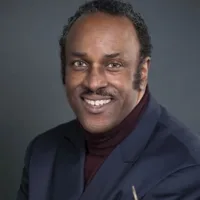
Dr. Edward Hubbard
Dr. Edward Hubbard, Ph.D. is President & CEO of Hubbard & Hubbard. Inc. and is the author of more than 59 Diversity and business-related books such as: “The Diversity Scorecard”, “The Hidden Side of Resistance to Change”, “How to Calculate Diversity Return on Investment”, “Mastering...
View Full Bio of Dr. Edward Hubbard What Attendees Are Saying
See the survey ratings
9 attendees rated this webinar 4.6 out of 5 on average.
4.6 Overall Rating
Webinar Presentation
- How many of the objectives of the event were met?
- 4.8
- How useful was the information presented at this event?
- 4.4
- Overall, how satisfied were you with this event?
- 4.3
Speaker Performance
- Overall, how satisfied were you with this presenter?
- 4.6
- How closely did the presenter follow the schedule?
- 4.8
CE Credits
These are the continuing education credits available to you for this webinar.
- 1.50 HRCI
 Human Resource Certification Institute Browse HRCI-approved webinars and earn recertification credits online. Live and on-demand HR training for PHR, SPHR, and GPHR recertification. Expert-led sessions from Aurora Training Advantage.
- 1.50 SHRM
 Society for Human Resource Management Aurora Training Advantage is recognized by SHRM to offer Professional Development Credits (PDCs) for the SHRM-CPSM or SHRM-SCPSM. For more information about certification or recertification, please visit www.shrmcertification.org.
- 1.50 ATAHR Aurora HR Aurora Training Advantage is offering continuing education points designed to recognize dedication to training and excellence in human resources.
Frequently Asked Questions
What is diversity recruiting and why is it a competitive advantage?
Diversity recruiting is the intentional practice of designing talent acquisition strategies that attract candidates from a wide range of backgrounds, experiences, identities, and perspectives. In today's knowledge economy, organizations that build diverse workforces consistently outperform those that don't: research shows companies in the top quartile for ethnic and gender diversity are significantly more likely to achieve above-average financial returns. Diverse teams make better decisions, generate more innovative solutions, and serve diverse customer bases more effectively. Beyond performance, diversity recruiting is increasingly a talent brand imperative—high-potential candidates actively evaluate an organization's commitment to inclusion during their job search. A diversity recruiting program is not about filling demographic quotas: it is about designing a process that removes systemic barriers to entry, expands the qualified candidate pipeline, and ensures selection decisions are based on merit rather than familiarity or implicit bias. Organizations that approach diversity recruiting as a business strategy—not an HR compliance exercise—achieve the most durable and impactful results.
How can organizations build a more diverse candidate pipeline?
Building a diverse candidate pipeline requires proactive outreach that reaches beyond the networks accessed through conventional recruiting. Organizations should diversify job posting channels: Historically Black Colleges and Universities (HBCUs), Hispanic-Serving Institutions (HSIs), professional associations serving underrepresented groups, diversity-focused job boards, and community organizations are pipeline sources most employers underutilize. Internship and co-op programs that reach diverse student populations early build relationships before full-time hiring cycles open. Employee referral programs, while cost-effective, tend to perpetuate existing demographic composition unless actively managed to encourage diverse referrals. Employer branding that authentically showcases diverse employees, leadership representation, and inclusion practices resonates with candidates from underrepresented backgrounds. Building relationships with community organizations and talent pipeline programs creates sustainable diversity sourcing that isn't dependent on a single hiring cycle. Organizations that invest in diverse pipeline development year-round—not just when specific positions are open—build structural diversity into their talent acquisition system over time.
How can HR design interview processes that avoid race and gender bias?
Bias in interviewing is one of the most significant barriers to diversity in hiring, and HR must design processes that actively mitigate it rather than relying on good intentions alone. Structured interviews—where all candidates answer the same predetermined questions rated on consistent scoring rubrics—dramatically reduce inconsistency and bias compared to unstructured conversations that favor candidates matching interviewers' cultural communication styles. Behavioral interview questions based on past experience are more predictive of future performance than hypothetical or conversational questions. Diverse interview panels ensure multiple perspectives evaluate each candidate, reducing the likelihood that a single interviewer's bias determines outcomes. Blind résumé screening—removing names, graduation years, and other demographic signals—reduces bias at the initial screening stage. Train all interviewers on unconscious bias, culturally sensitive communication, and legally compliant questioning before participation. Document evaluation rationale in writing to create accountability and facilitate review when diversity metrics raise questions about selection patterns.
What questions do diverse job candidates ask employers and how should HR prepare?
Candidates from underrepresented backgrounds often evaluate potential employers on dimensions beyond compensation and job responsibilities. They want to understand whether the organization is genuinely committed to inclusion. Expect questions about leadership diversity—are there executives or senior leaders who share their background? What does advancement look like for diverse employees? How does the organization measure and report on diversity and inclusion progress? What is the culture like for people from their background, and can they speak with current employees who share their identity? How does the company respond when bias incidents occur? What is the employee resource group landscape, and how much executive support and budget do ERGs receive? HR and hiring managers should be prepared to answer these questions with specific data and honest context rather than vague assurances. Organizations that have invested authentically in inclusion will answer these questions confidently—and organizations that have not will be recognized and avoided by the very candidates they are working hardest to attract.
How should HR measure the success of a diversity recruiting program?
Measuring diversity recruiting effectiveness requires tracking metrics at each stage of the talent acquisition funnel, not just final hiring outcomes. Source diversity metrics reveal which channels are actually generating diverse candidate flow—informing where to invest and disinvest recruiting resources. Pipeline representation metrics track the percentage of underrepresented candidates at each stage: application, phone screen, first interview, final round, and offer. Comparing these stage-by-stage percentages reveals where diverse candidates are dropping out, enabling targeted process improvement. Offer acceptance rates by demographic group indicate whether diverse candidates choose to join after receiving offers—a proxy for employer brand quality. Year-over-year representation in new hires by role level and function tracks whether the program is increasing actual workforce diversity over time. Retention and advancement data for diverse hires is equally critical: diversity recruiting that places people in organizations where they cannot thrive or advance generates attrition that undermines the entire investment. Organizations that measure the full talent lifecycle—from pipeline to advancement—develop the most effective, sustainable diversity recruiting programs.