Purchasing Contract Administration
Access this expert-led webinar instantly, available anytime on-demand.
Included in All-Access Membership
The volatility of todays business conditions and increasing complexity of relationships have combined to raise the importance of defining how to define what the risks are and how to ensure meeting expectations. Good contracts provide a mutually agreed upon base for your supplier relationships. It is a tool for governance. This presentation will provide some principles and practices for aiding in your administration of the contract.
- Understand the critical pieces of a contract.
- Learn what should be covered in your inaugural meeting and why that is so important.
- Gain insight into different approaches to relationship management and how to choose your approach.
- Lean how to establish your KPIs and and actions you should take beyond just measurement.
Join Mike Gozzo and walk away feeling confident in your contract administration.
Level: BasicFormat: Group Internet Based
Instructional Method: QAS Self-Study (Traditional)
NASBA Field of Study: Management Services (2 hours)
Program Prerequisites: None
Advance Preparation: No
- Introduction
- Outline 00:01:30
- What is a Contract? 00:03:10
- What Does a Contract Do? 00:05:58
- Checklist of Key Questions 00:07:31
- Stakeholder Management 00:09:55
- Standard Forms in Contracting 00:12:43
- Contract Management 00:14:48
- Foundations of Effective Management 00:17:42
- Contract Managers Role: 00:22:29
- Contract Adminstration 00:26:18
- Contract Adminstration - Inaugural Meeting 00:29:27
- Contract Adminstration - Contrat Program Management 00:33:41
- Contract Adminstration - Relationship Management 00:39:03
- Supplier Relationships 00:39:28
- Increasing Supplier Involement 00:45:18
- Transforming the Relationship 00:47:59
- Contract Adminstration - Measuring Performance 00:52:14
- Effective System of Monitoring Contract Performance 00:53:36
- Key Performance Indicators (KPI) 00:55:58
- Performance Grid 00:59:07
- Grid View 00:59:47
- Grid Preparation 01:01:43
- Stage’s In Developing KPI’s 01:03:49
- Results -Variation Claims 01:06:33
- What Is Variation 01:07:40
- Variation 01:10:23
- Consequences of Variations 01:14:02
- What Is a Claim? 01:18:05
- Avoiding Claims 01:21:00
- Recap 01:27:16
- Attendee Q & A 01:30:55
- Presentation Closing 01:40:20
-
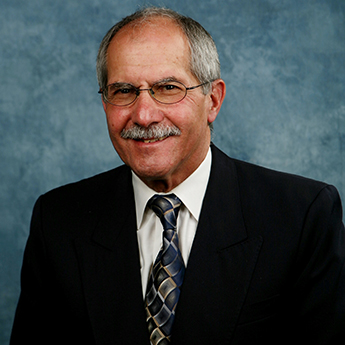
Michael W. Gozzo
Michael W. Gozzo provides consulting and training services to all levels of management and is a Supply Chain Specialist including Purchasing (Supplier Collaboration), Inventory Control and Production/Operations Management. With many years of practical international experience, he offers a supe [...]
ATAPU Credit
Aurora Training Advantage is offering continuing education points designed to recognize dedication to training and excellence in purchasing.ATATX Credit
Aurora Training Advantage is offering continuing education points designed to recognize dedication to training and excellence in accounting.CPE Credit

Aurora Training Advantage is registered with the National Association of State Boards of Accountancy (NASBA) as a sponsor of continuing professional education on the National Registry of CPE Sponsors. State boards of accountancy have final authority on the acceptance of individual courses for CPE credit. Complaints regarding registered sponsors may be submitted to the National Registry of CPE Sponsors through its website: www.nasbaregistry.org.
For more information regarding administrative policies such as complaint and refund, and cancellation please contact our offices at 407-542-4317 or [email protected].
You must answer all questions during the webinar, view the recording completely and pass the test at the end with 70% correct answers to receive CPE credit.
- Contract 00:01:47
- Failure Mode Effects Analysis (FMEA) 00:35:36
- Procurement 00:23:32
- Purchase Order 00:13:41
- Request for Proposal (RFP)
- Request for Quotation 00:13:08
- Risk Register 00:35:23
- Stakeholder 00:10:03, 01:04:15
Contract: A written or spoken agreement, especially one concerning employment, sales, or tenancy, that is intended to be enforceable by law.
Failure Mode Effects Analysis (FMEA): Failure mode and effects analysis is the process of reviewing as many components, assemblies, and subsystems as possible to identify potential failure modes in a system and their causes and effects.
Procurement: Procurement is the process of finding and agreeing to terms, and acquiring goods, services, or works from an external source, often via a tendering or competitive bidding process. Procurement is used to ensure the buyer receives goods, services, or works at the best possible price when aspects such as quality, quantity, time, and location are compared.
Purchase Order: A legal contract between a buyer and a vendor. It lists the materials or services to be purchased on specified terms and conditions (quantity, price / pricing conditions, delivery date).
Request for Proposal (RFP): A request for proposal (RFP) is a document that solicits proposal, often made through a bidding process, by an agency or company interested in procurement of a commodity, service, or valuable asset, to potential suppliers to submit business proposals.
Request for Quotation (RFQ): A request for quotation (RFQ) is a standard business process whose purpose is to invite suppliers into a bidding process to bid on specific products or services.
Risk Register: A risk register is a document used as a risk management tool and to fulfill regulatory compliance acting as a repository for all risks identified and includes additional information about each risk, e.g. nature of the risk, reference and owner, mitigation measures. It can be displayed as a scatterplot or as a table.
Stakeholders: A stakeholder is a party that has an interest in a company and can either affect or be affected by the business. The primary stakeholders in a typical corporation are its investors, employees, customers and suppliers.