Purchasing Requisition Design
Access this expert-led webinar instantly, available anytime on-demand.
Included in All-Access Membership
The purchase requisition, or purchase request, is the kickoff of the purchasing process. It’s very important to have a true understanding of that process. The requisition process often gets mentioned in the same thoughts as a Purchase Order. While it may seem like these are the same thing, they are different, and each has its own specific role within the purchasing process.
Outline:
- Requisition Description
- Different Types of Requisitions and Their Respective Purposes
- The Process and Flow of Requisitions
- Examples and Templates
- Other Points - Shifting Emphasis Toward Suppliers
- Conclusions
Your Benefits of Attending:
- Understand the role and importance of purchase requisition.
- What are the contents and workflows of different types of requisitions?
- What are the different types of requisitions?
- How to prepare a requisition?
- Learn about the transitioning opportunity for requisitioning.
Format: Group Internet Based
Instructional Method: QAS Self-Study (Traditional)
NASBA Field of Study: Management Services (2 hours)
Program Prerequisites: None
Advance Preparation: No
- Introduction
- Objective 00:01:52
- Outline 00:02:27
- Section One - Requisition Description 00:04:51
- Why Is Purchase Requisition Important? 00:05:08
- Description of Requisition 00:06:09
- Section Two - Requisition Types & Purpose 00:07:27
- Requisition Purpose 00:07:31
- Materials/Services 00:10:12
- Requisition Purpose - Request For Quotation 00:12:03
- Need Determination 00:13:20
- Need/Description/Specification 00:16:40
- Procuring Services 00:19:52
- Procuring Services Cont’d 00:20:22
- Six Pitfalls 00:22:07
- Statement of Work Definition 00:26:26
- Statement of Work Purpose 00:27:38
- Preparing The Statement 00:28:23
- Things To Avoid In The Statement Of Work 00:30:17
- What To Include In The Statement Of Work 00:32:36
- What To Include In The Statement Of Work Continued 00:33:35
- Statement Of Work (SOW) 00:34:47
- Section Three - Process & Flow 00:35:40
- Requisition Process 00:35:53
- Purchase Requisition 00:36:58
- PR Creation And Approval 00:38:27
- Basic Purchasing Process 00:43:00
- Section 4 - Examples & Templates 00:46:29
- Requisition Procedure & Sample 00:46:57
- Template 00:48:05
- Special Requisition Guidelines 00:49:26
- Section 5 - Other Points To Consider 00:50:29
- Manage The Purchasing Cycle 00:50:50
- Purchasing Cycle Steps 3-5 00:52:02
- Fulfilling Customer Expectations 00:52:50
- Service Levels 00:53:23
- Inventory Costs 00:54:33
- Item Costs 00:56:22
- Carrying Costs 00:57:49
- Ordering Costs 01:01:07
- Impact On Inventory 01:02:21
- Carrying Cost - Example 01:02:59
- What Has Precipitated This? 01:04:26
- Inventory Replenishment Systems And Customer Satisfaction 01:05:41
- SMI/VMI 01:06:45
- Potential Benefits 01:12:02
- Potential Benefits Continued 01:12:57
- Conclusion 01:14:12
- Recap 01:15:30
- Q&A 01:20:12
- Closing Remarks 01:40:12
- Presentation Closing 01:42:44
-
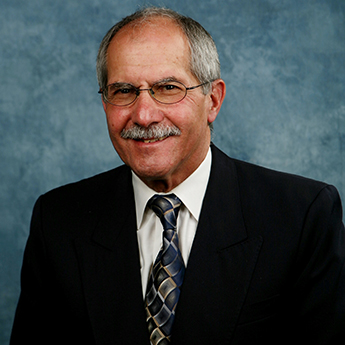
Michael W. Gozzo
Michael W. Gozzo provides consulting and training services to all levels of management and is a Supply Chain Specialist including Purchasing (Supplier Collaboration), Inventory Control and Production/Operations Management. With many years of practical international experience, he offers a supe [...]
CPE Credit

Aurora Training Advantage is registered with the National Association of State Boards of Accountancy (NASBA) as a sponsor of continuing professional education on the National Registry of CPE Sponsors. State boards of accountancy have final authority on the acceptance of individual courses for CPE credit. Complaints regarding registered sponsors may be submitted to the National Registry of CPE Sponsors through its website: www.nasbaregistry.org.
For more information regarding administrative policies such as complaint and refund, and cancellation please contact our offices at 407-542-4317 or [email protected].
You must answer all questions during the webinar, view the recording completely and pass the test at the end with 70% correct answers to receive CPE credit.
- Cost 00:56:26, 00:56:34, 00:57:47, 00:57:52, 00:58:17, 01:01:11, 01:03:18
- Distribution Requirement Plan (DRP) 00:16:24
- Inventory 00:53:45, 00:53:49, 00:54:43, 01:02:27, 01:02:37, 01:06:12, 01:12:42
- Maintenance Repair Overhead (MRO) 00:14:12, 00:15:02, 00:16:21
- Procurement 00:02:24, 00:10:57, 00:52:07, 00:57:56
- Purchase Order 00:10:07
- Purchase Requisition 00:01:32, 00:02:36,00:04:59, 00:05:14, 00:06:51, 00:07:40, 00:12:08, 00:16:32, 00:35:47, 00:37:05, 00:38:41, 00:43:06, 01:12:00, 01:20:04
- Request For Quotation (RFQ) 00:12:17,00:12:19
- Service Levels 00:53:26, 00:53:31
- Statement of Work (SOW) 00:20:13, 00:20:46, 00:21:00, 00:23:30, 00:26:35, 00:26:42, 00:27:45, 00:28:26, 00:30:15, 00:30:25, 00:32:43, 00:35:05, 00:35:38
- Supplier 00:09:55, 00:10:43, 00:11:08, 00:26:22, 00:45:24, 00:53:48, 01:12:59
Cost: The sum of the applicable expenditures and charges directly or indirectly incurred in bringing an article to its existing condition and location
Distribution Requirement Planning (DRP): Distribution Requirements Planning (DRP) is the process of determining the right quality of finished goods to be sent to each distribution center or warehouse in order to meet customer demand. During DRP, customer and forecasted demand are translated into purchase orders. This process depends on actual demand signals such as customer orders as those orders are used to plan the gross requirements of the supply source.
Inventory: A company's inventory typically involves goods in three stages of production: raw goods, in-progress goods, and finished goods that are ready for sale. Inventory or stock refers to the goods and materials that a business holds for the ultimate goal of resale, production or utilization.
Maintenance Repair Overhead (MRO): Maintenance expenses incurred to maintain and repair equipment directly related to the manufacturing process are considered manufacturing overhead expenses. Maintenance expenses related to equipment and premises outside of manufacturing are non-manufacturing overhead.
Procurement: Procurement is the process of finding and agreeing to terms, and acquiring goods, services, or works from an external source, often via a tendering or competitive bidding process. Procurement is used to ensure the buyer receives goods, services, or works at the best possible price when aspects such as quality, quantity, time, and location are compared.
Purchase Order: A legal contract between a buyer and a vendor. It lists the materials or services to be purchased on specified terms and conditions (quantity, price / pricing conditions, delivery date).
Purchase Requisition: A purchase requisition is a document used as part of the accounting process to initiate a merchandise or supply purchase. By processing a purchase requisition, appropriate controls can monitor the legitimacy of a purchase, as well as identify the business need for the products.
Request For Quotation (RFQ): A process in which a company solicits select suppliers and contractors to submit price quotes and bids for the chance to fulfill certain tasks or projects.
Service Levels: Defines the standard of performance required from a service provider and allows measurement and reporting against the agreed standard.
Statement of Work (SOW): A statement of work is a document routinely employed in the field of project management. It is the narrative description of a project's work requirement. It defines project-specific activities, deliverables, and timelines for a vendor providing services to the client.
Supplier: A supplier is an entity that supplies goods and services to another organization. A supplier is usually a manufacturer or a distributor. A distributor buys goods from multiple manufacturers and sells them to its customers. Similar Terms. A supplier is also known as a vendor.