Get ahead before the holidays. Individual webinars are $149 throughout October. *Pricing automatically applied in cart.

On-Demand Webinar

Dealing with Difficult People

  • Recorded January 30, 2024
  • 90 Minutes
  • Available now
CE credits
  • 1.50 HRCI (Human Resource Certification Institute)
  • 1.50 SHRM (Society for Human Resource Management)
  • 1.50 ATAHR (Aurora HR)

What You'll Learn

This comprehensive course equips Human Resource professionals with practical strategies and psychological insights to effectively manage challenging individuals in the workplace. From understanding personalities to employing de-escalation techniques, this course offers actionable skills to navigate various interpersonal conflicts confidently.
  1. Introduction to Personality Typology:
  2. Identifying Common Difficult Personality Types in the Workplace
View Full Description

This course strikes a balance between theory and practical application, providing HR professionals with a toolkit to navigate challenging scenarios with finesse and empathy. Engage, learn, and master the art of dealing with difficult people in the workplace!

Understanding Difficult Personalities 

Communication Strategies and Conflict Resolution 

  • Tailoring communication and interaction strategies for the workplace 
  • Active Listening and Empathy
  • De-escalation Techniques and Conflict Resolution

Constructive Engagement and Relationship Building 

  • Building Rapport and Trust
  • Strategies for Collaborative Problem-Solving

Maintaining Professional Boundaries and Self-Care 

  • Establishing Workplace Boundaries with Difficult Individuals
  • Self-Care Strategies

Meet Your Speaker
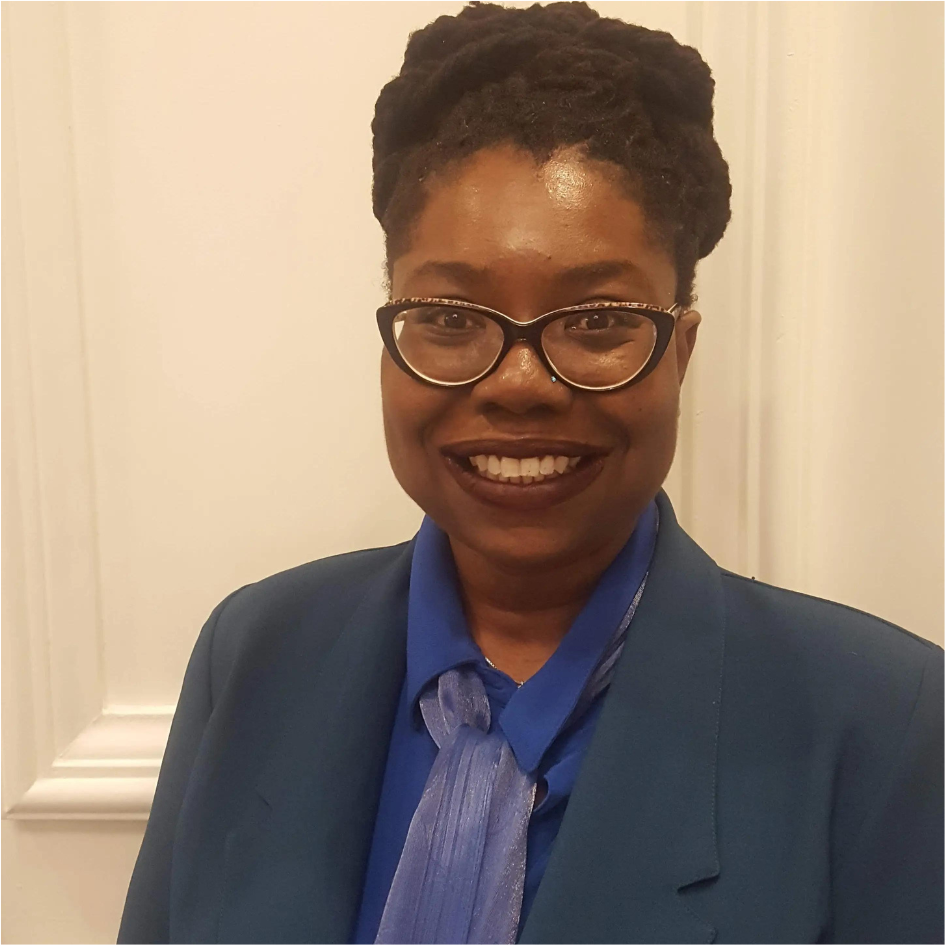
Faith Knight

Faith Knight is a seasoned expert in resolving employment and human resources disputes, bringing a wealth of hands-on HR and risk management experience to her role. With a career spanning over two decades, she's earned her place as a trusted problem solver, known for her ability to turn workplace...

View Full Bio of Faith Knight

What Attendees Are Saying

  • “no additional comments ”

  • “Very impressed. Will recommend to others!”

  • “Useful”

See the survey ratings

4 attendees rated this webinar 4.9 out of 5 on average.

4.9 Overall Rating

Webinar Presentation

How many of the objectives of the event were met?
5.0
How useful was the information presented at this event?
4.5
Overall, how satisfied were you with this event?
4.8

Speaker Performance

Overall, how satisfied were you with this presenter?
5.0
How closely did the presenter follow the schedule?
5.0

CE Credits

These are the continuing education credits available to you for this webinar.

  • 1.50 HRCI Human Resource Certification Institute Browse HRCI-approved webinars and earn recertification credits online. Live and on-demand HR training for PHR, SPHR, and GPHR recertification. Expert-led sessions from Aurora Training Advantage.
  • 1.50 SHRM Society for Human Resource Management Aurora Training Advantage is recognized by SHRM to offer Professional Development Credits (PDCs) for the SHRM-CPSM or SHRM-SCPSM. For more information about certification or recertification, please visit www.shrmcertification.org.
  • 1.50 ATAHR Aurora HR Aurora Training Advantage is offering continuing education points designed to recognize dedication to training and excellence in human resources.
Past Webinars

Earlier sessions of this series:

Frequently Asked Questions

What are the most common types of difficult employee behaviors managers need to address?
Managers encounter a consistent range of difficult employee behaviors that, if left unaddressed, erode team morale, reduce productivity, and create legal risk. Wendy Sellers identifies 12 common difficult behavior types in her Aurora Training Advantage webinar, including: the Complainer, who persistently focuses on problems without contributing solutions; the Manipulator, who uses social dynamics to advance personal agendas at others' expense; the Bully, who uses intimidation or aggression to control colleagues; the Passive-Aggressive employee, who expresses resistance indirectly through subtle non-compliance or sarcasm; the Disengaged or Checked-Out employee, who contributes minimally and saps team energy; and the Drama Creator, who amplifies interpersonal conflicts. Each behavior type has distinct underlying causes—unmet needs, personality traits, organizational frustrations, or personal circumstances—which affect the most effective response strategy. Distinguishing between difficult personalities and difficult situations is critical: a person who behaves difficultly under stress may respond very differently than someone with a persistent personality-based pattern. Understanding DiSC personality styles adds another layer of insight, helping managers recognize that behavior perceived as difficult may reflect a communication style mismatch rather than malicious intent. This knowledge enables managers to respond strategically rather than reactively, addressing root causes rather than just surface behaviors.
How should managers use a structured model to conduct difficult conversations with employees?
Difficult conversations—addressing poor performance, disruptive behavior, or interpersonal conflict—are among the most avoided and yet most critical managerial responsibilities. Wendy Sellers presents a six-step model for conducting these conversations in her Aurora Training Advantage webinar, providing managers with a clear framework that builds confidence and improves outcomes. The model begins with preparation: identifying the specific behavior (not personality) to address, gathering factual documentation, and determining the desired outcome. Step two is creating the right setting: private, neutral, and with adequate time to prevent rushed conclusions. Step three involves opening the conversation with a direct statement of purpose that focuses on observed behavior and impact—'I've noticed X, and it's affecting Y'—rather than character judgments. Step four is active listening: inviting the employee's perspective before moving to solutions, because the employee may have context the manager lacks. Step five is collaborative problem-solving: jointly identifying what needs to change, what support is available, and what the path forward looks like. Step six is documentation and follow-up: confirming the conversation in writing with agreed actions and check-in timelines. This structured approach transforms conflict from an adversarial confrontation into a professional development conversation, improving both the immediate outcome and the long-term relationship.
How does ADA compliance affect how managers handle difficult employee behavior?
The Americans with Disabilities Act (ADA) creates important considerations when managing difficult employee behaviors that may have a disability-related component. Managers must be aware that behaviors sometimes associated with 'difficult' employees—such as emotional outbursts, difficulty with change, communication challenges, or concentration issues—may be manifestations of protected disabilities including mental health conditions, ADHD, PTSD, or autism spectrum disorders. This doesn't mean employers must tolerate conduct that violates workplace standards, but it does mean the approach must account for potential ADA obligations. When a manager suspects a possible disability connection, the appropriate step is engaging in the interactive process with HR—exploring whether a reasonable accommodation exists that would enable the employee to meet conduct and performance standards. Discipline for disability-related conduct requires careful analysis: an employer can generally hold a disabled employee to the same conduct standards as other employees, but must first explore whether an accommodation would address the behavior before proceeding with adverse action. Wendy Sellers addresses ADA compliance in her Aurora Training Advantage dealing with difficult people webinar, providing managers with practical guidance on navigating this intersection of conduct management and disability law. Failure to account for potential ADA obligations in employee discipline can create significant legal liability. HR should always be involved when disability considerations are present.
How do DiSC personality styles affect workplace behavior and conflict management?
DiSC is a widely used behavioral assessment framework that categorizes individuals into four primary styles—Dominance (D), Influence (i), Steadiness (S), and Conscientiousness (C)—each with distinct communication preferences, decision-making styles, and conflict responses. Understanding DiSC enables managers to recognize that much of what appears to be 'difficult behavior' may actually be a style mismatch: a high-D employee's direct, assertive communication may read as aggressive to a high-S colleague; a high-i employee's expressive, relationship-focused style may appear unfocused to a high-C counterpart. High-D individuals respond to conflict by confronting it directly and moving quickly to resolution—they can be perceived as aggressive or impatient. High-i individuals prefer maintaining positive relationships and may avoid difficult conversations, leading to unresolved issues. High-S individuals prioritize harmony and may internalize conflict rather than expressing concerns, creating passive resistance. High-C individuals focus on accuracy and process and may appear inflexible or hypercritical when standards aren't met. Wendy Sellers incorporates DiSC analysis into her Aurora Training Advantage difficult people management webinar, showing managers how to adapt their communication and conflict management approach based on the employee's dominant style. This style awareness significantly reduces interpersonal friction and improves the outcomes of difficult conversations.
What is the impact of unaddressed difficult employee behavior on team morale and organizational performance?
Unaddressed difficult employee behavior creates a ripple effect of organizational harm that extends far beyond the immediate interpersonal conflict. Team morale suffers when employees observe that disruptive, disrespectful, or disengaged behavior goes without consequence—it signals that leadership either doesn't notice or doesn't care, eroding trust in management. High-performing employees—who have the most options—are most likely to leave when toxic behavior goes unmanaged, as they choose not to tolerate environments where conduct standards aren't enforced. Productivity decreases in teams with chronic difficult behavior: collaboration is hindered, communication becomes guarded, and energy is diverted from work to navigating interpersonal dynamics. The difficult behavior itself often escalates when unchallenged, as the employee learns there are no consequences for their conduct. Psychological safety—the foundation of high-performing teams—is directly undermined by behaviors like bullying, manipulation, and persistent negativity. Managers who avoid addressing difficult behavior out of discomfort are inadvertently punishing the team as a whole. Legal liability also increases: hostile work environment claims, harassment complaints, and wrongful termination actions often trace back to tolerated conduct patterns that HR or management failed to address at early stages. Wendy Sellers makes a compelling case in her Aurora Training Advantage webinar that addressing difficult behavior promptly, clearly, and professionally is not just a management preference—it's an organizational imperative.